
PUNE
Since the end of the Ganesh festival 2024, the Punaravartan team has been developing a web application as a tool for all stakeholders involved in the campaign. This application can connect the clay donors with the clay processors and recyclers eventually.
The Pune Municipal Corporation took the initiative to integrate this web application into their PMC care mobile application for easy access to citizens of Pune.
This was launched by Hon’ble Sri Prithwiraj B P on the occasion of Earth Day at his office.
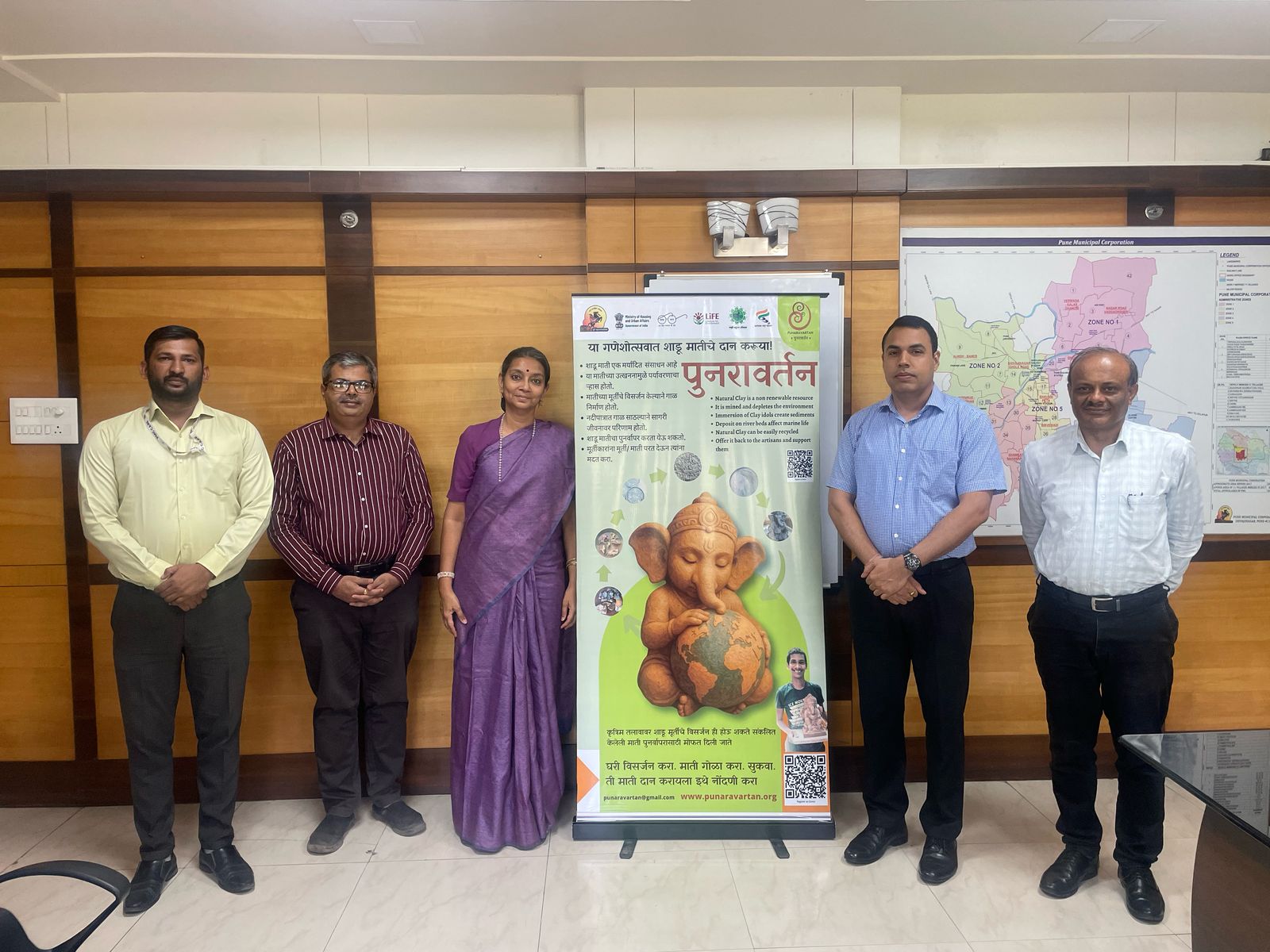
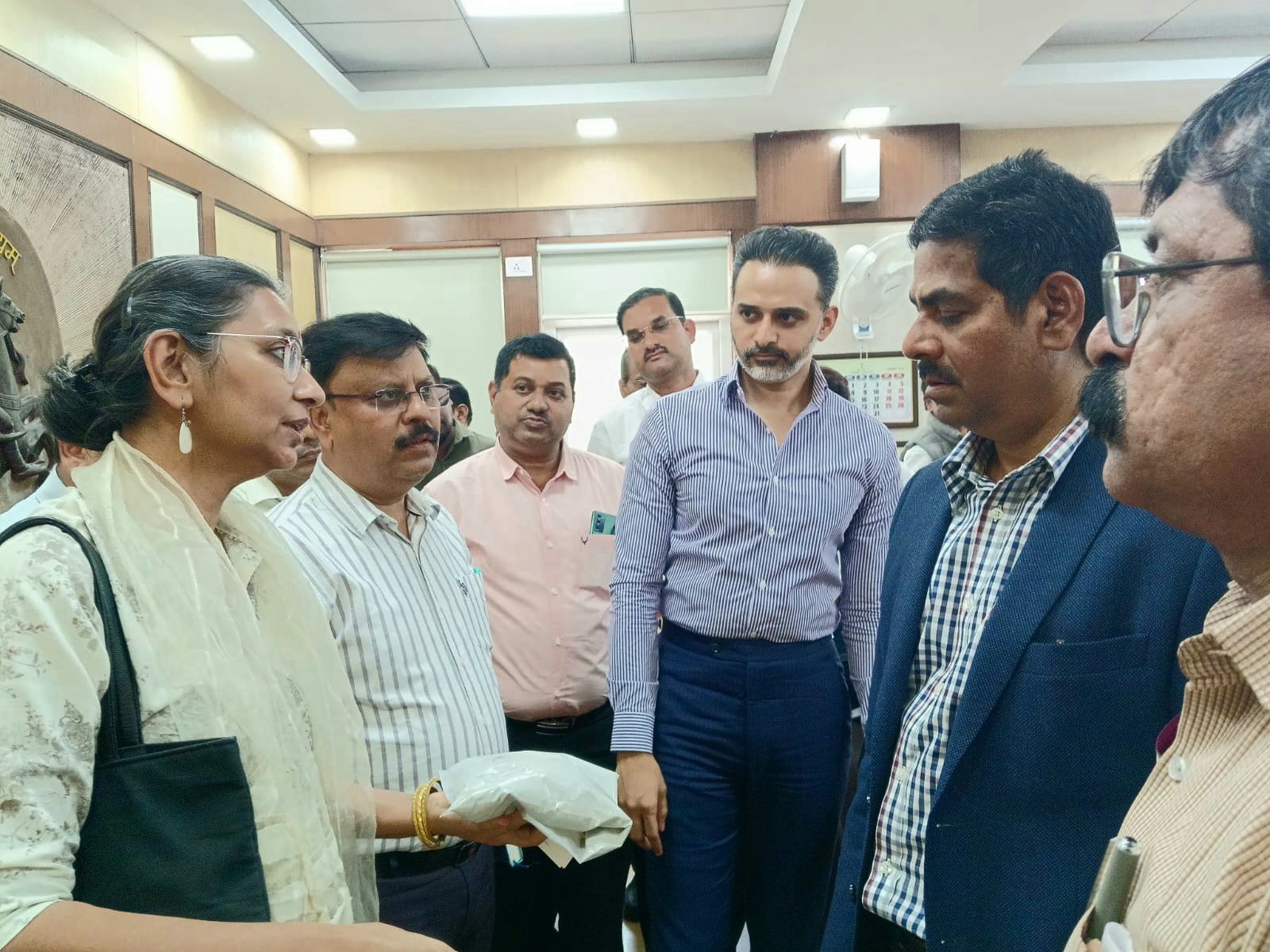
On 22 Jan 2025, we met with the chairman of the Maharashtra Pollution Control Board Mr Siddhesh Kadam, while he was visiting Pune. Pune Municipal Commissioner Sri Rajendra Bhosale and MPCB PRO Sri Sanjay Bhuskute were also present.
Punaravartan 2024
AABHAAR SABHA
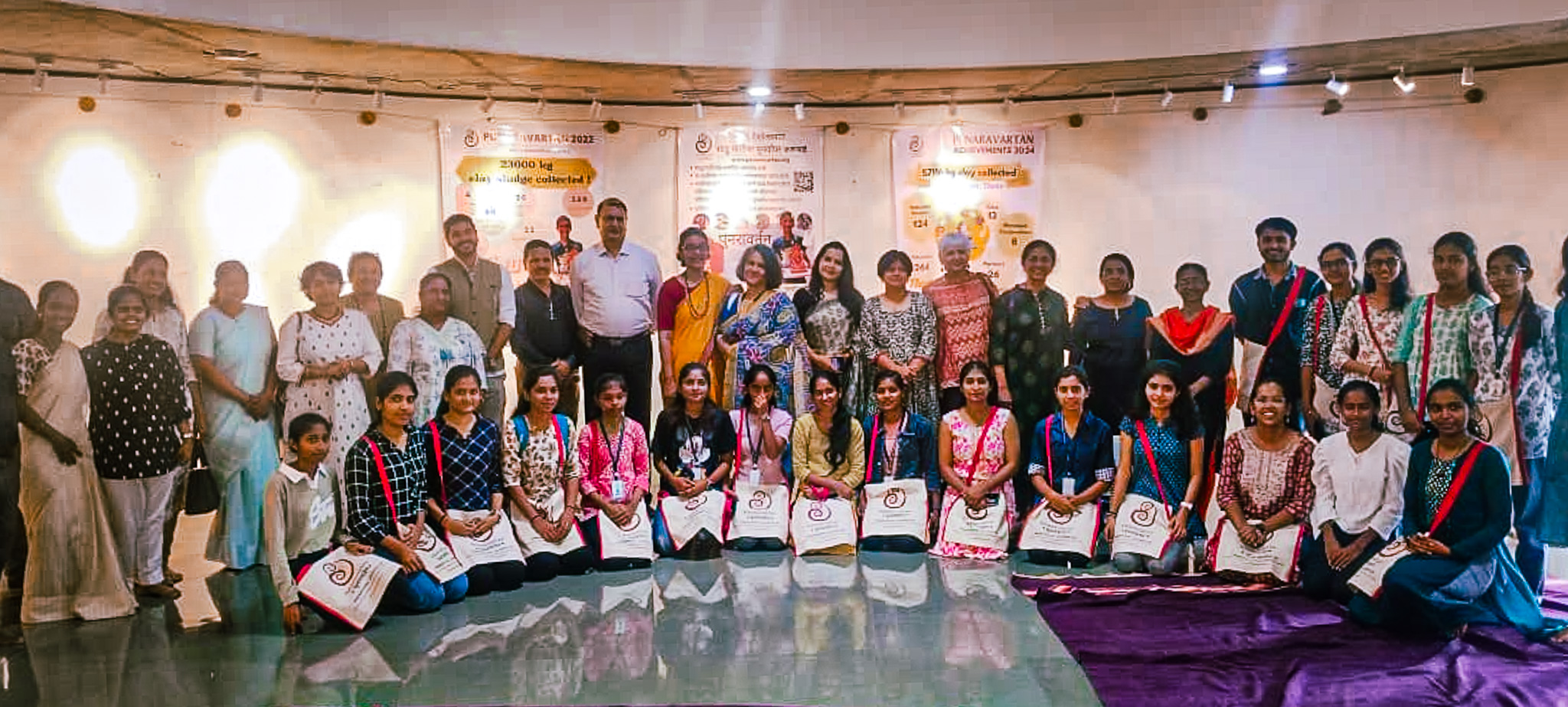
As is the tradition we organised an Aabhaar sabha for all the partners and volunteers in Pune who made the event such a resounding success. This was hosted by the Rupa Rahul Bajaj Center for Environment and Arts, Pune.
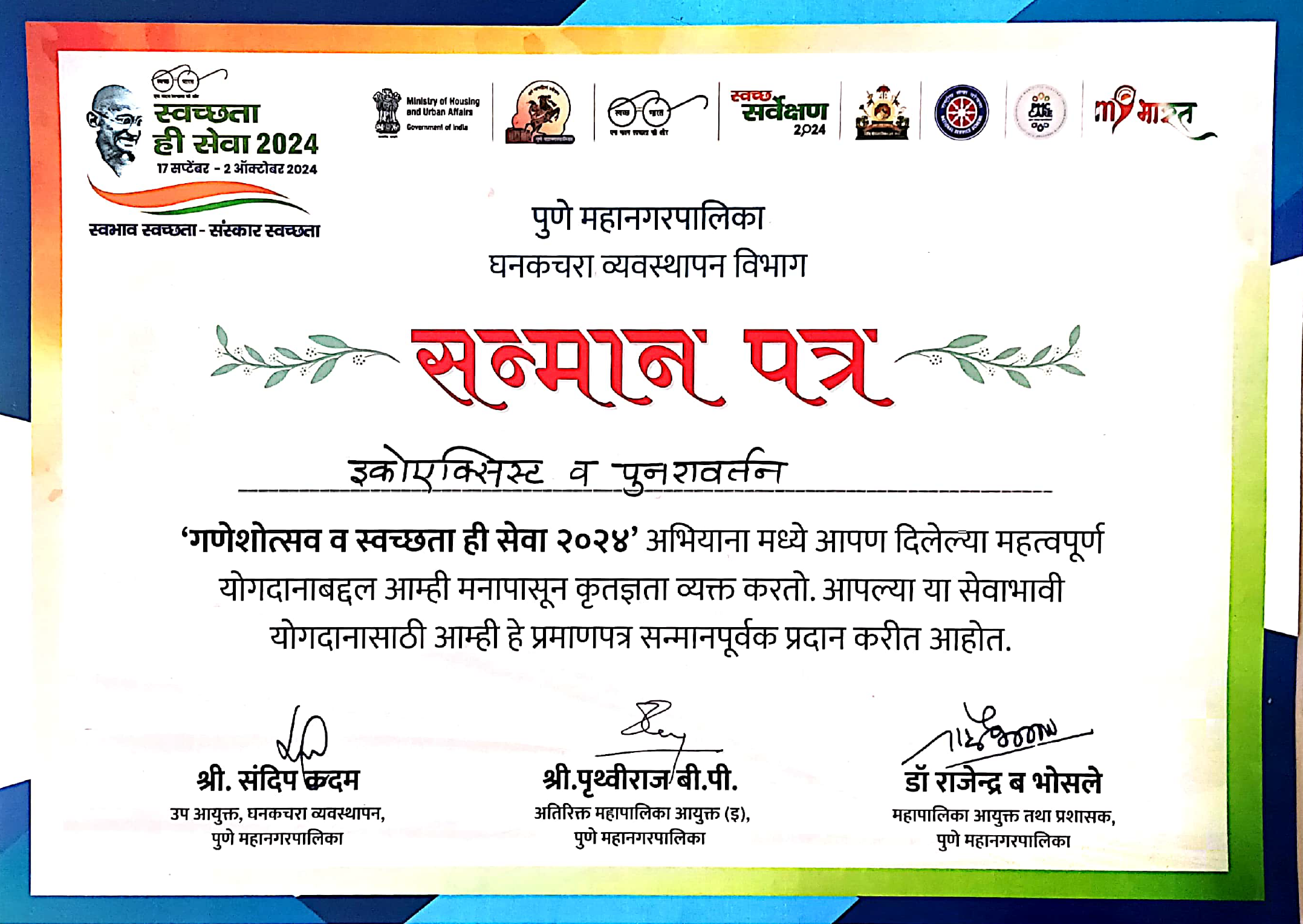
Certificate
PUNE 2024
List of collection centers
15 Sept & 22 Sept 2024
10 am to 1 pm
See Collection Centres Neer Me
MAP OF COLLECTION CENTERS
Dates of collection : 15 Sept and 22 Sept 2024
Click on the icon on top left of the map to get details of coordinator for each center and contact details
LIST OF PMC COLLECTION CENTERS
Dates of collection : 12 Sept and 17 Sept 2024
4 pm to 8 pm
See Govt. Collection Centers Near me
MAP OF PMC COLLECTION CENTERS
Dates of collection : 12 Sept and 17 Sept 2024
Click on the icon on top left of the map to get details of coordinator for each center and contact details
Punaravartan Posters 2024
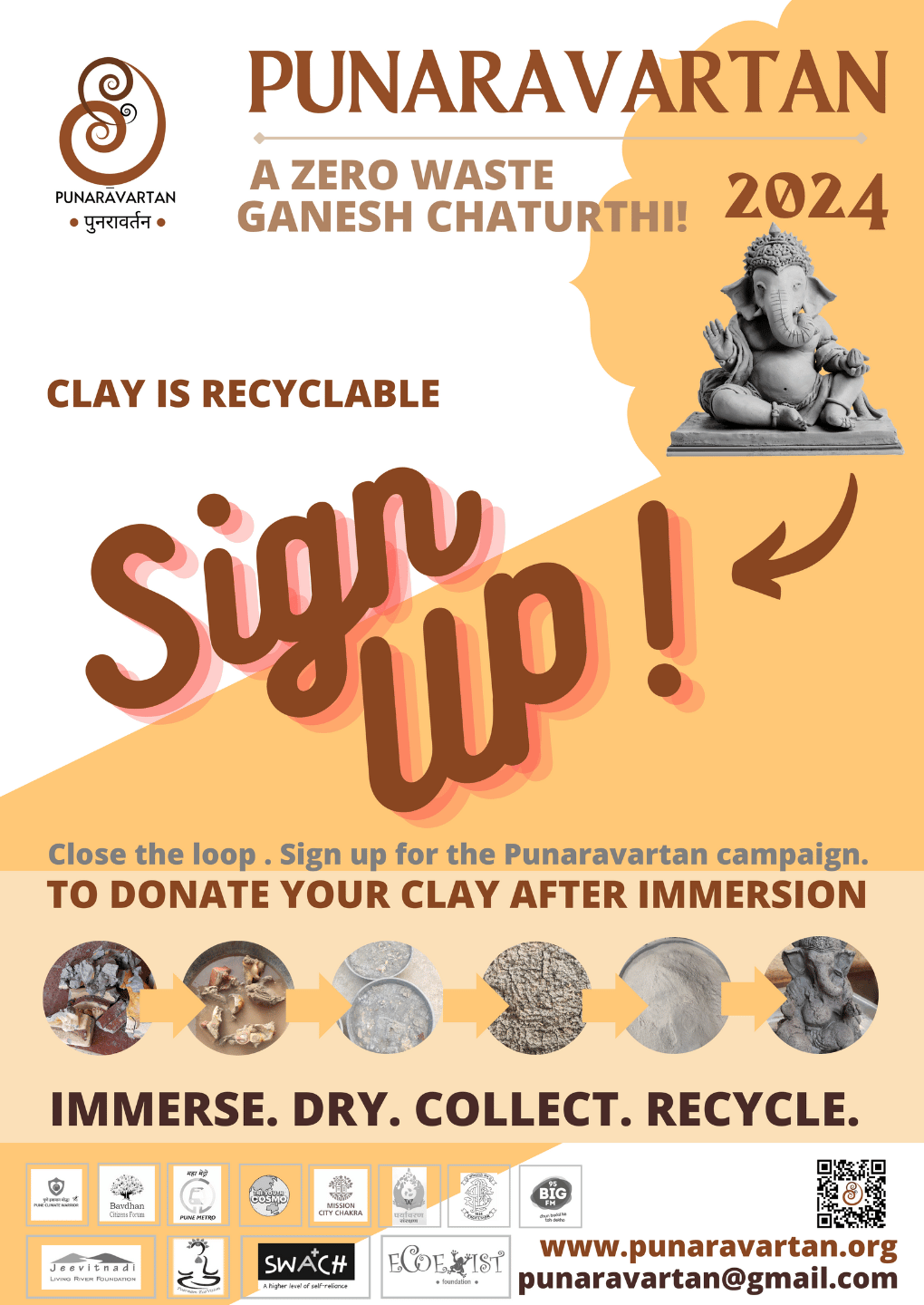
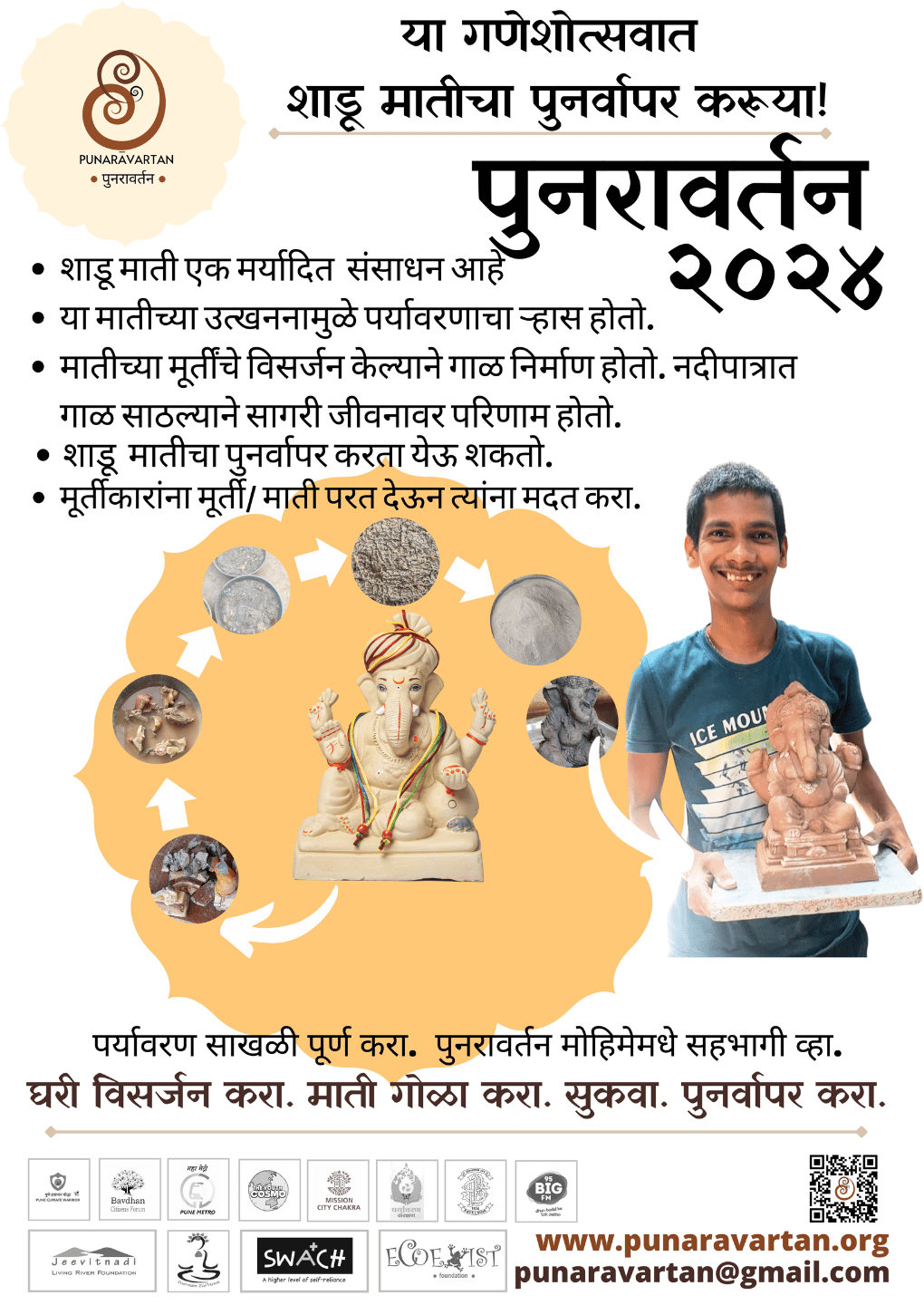
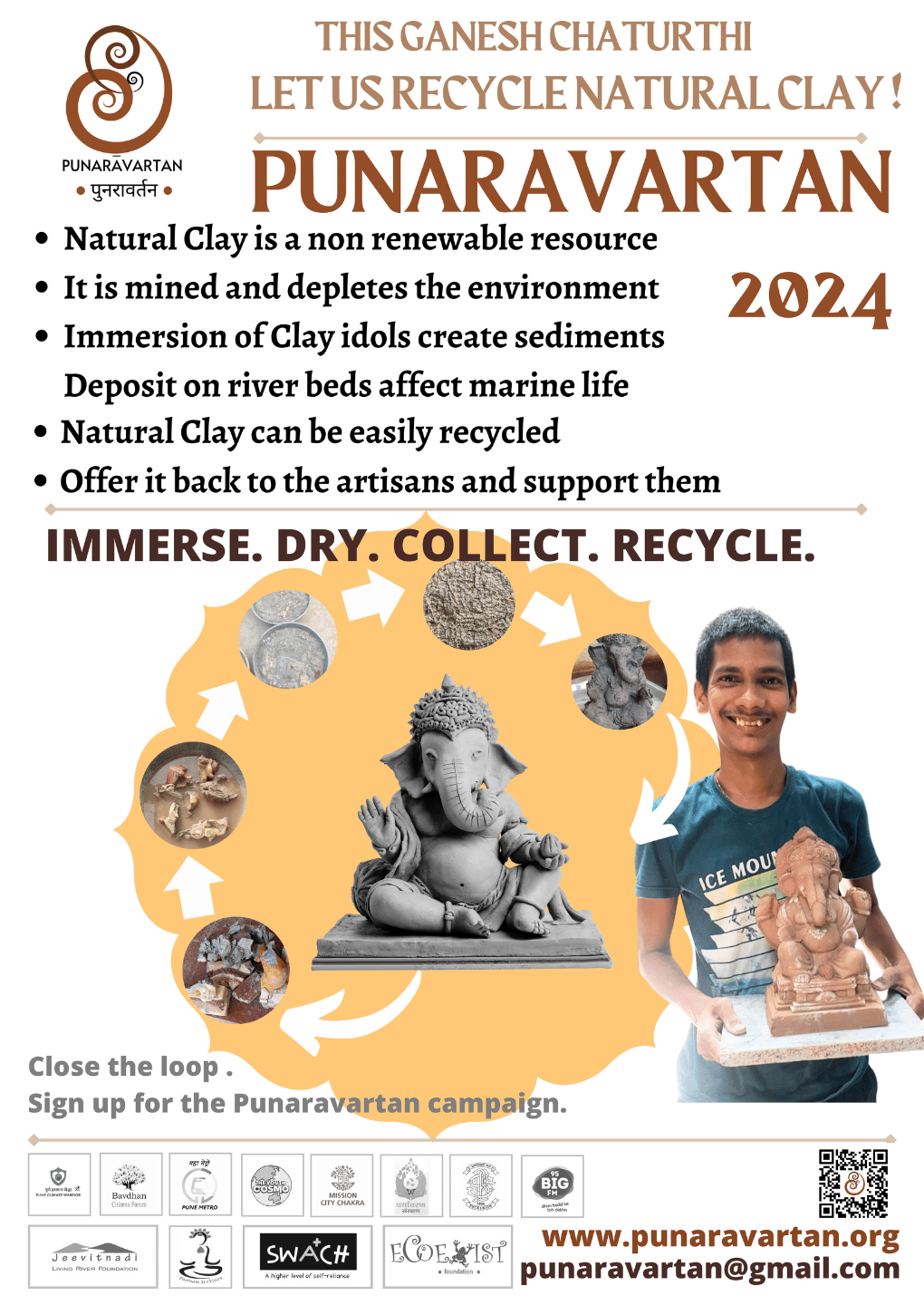
Campaign Activities
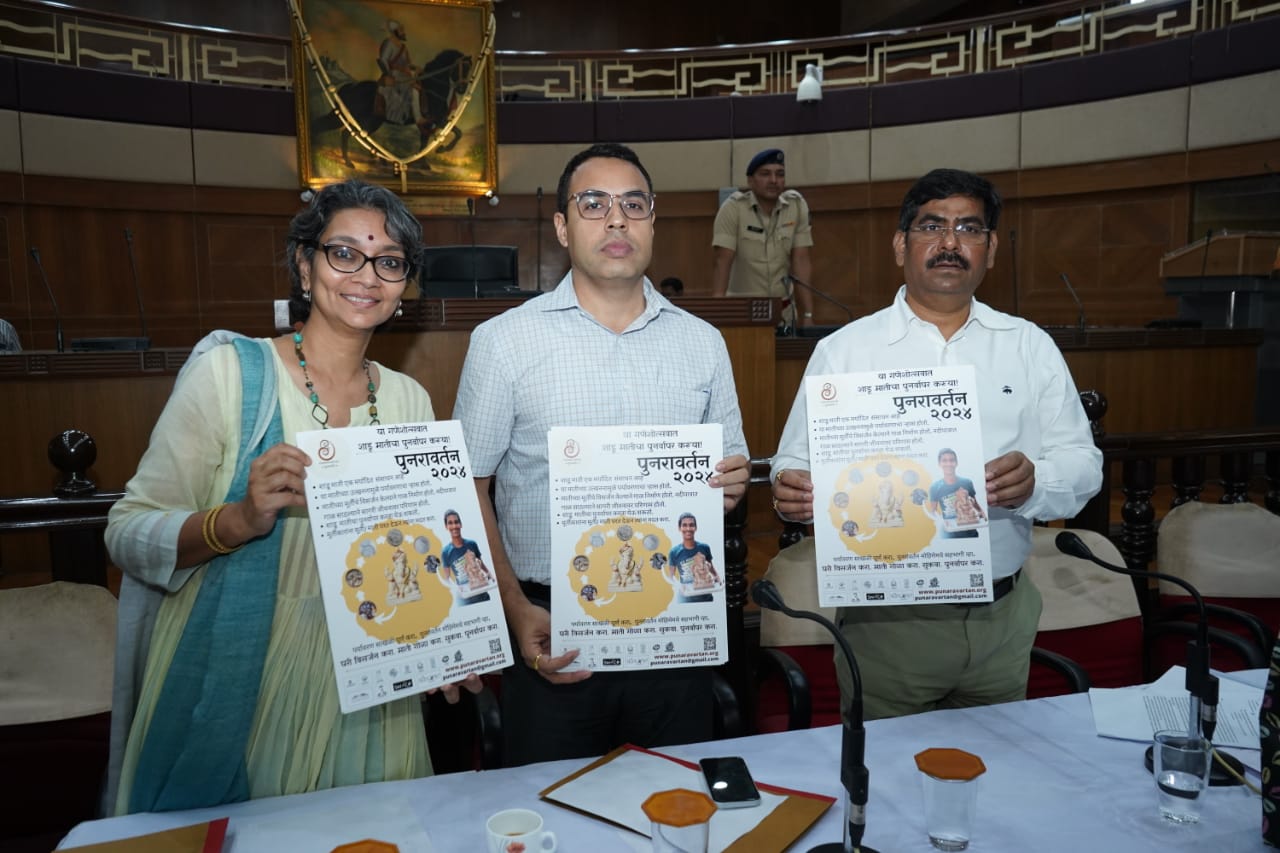
PMC adopts Punaravartan 2024
Pune Municipal Commissioner Sri Rajendra Bhosale and Additional Commissioner Sri Prithviraj B P launch Punaravartan for the year 2024.
PMC-MANYAT-PATRA
PMC Manyata Patra
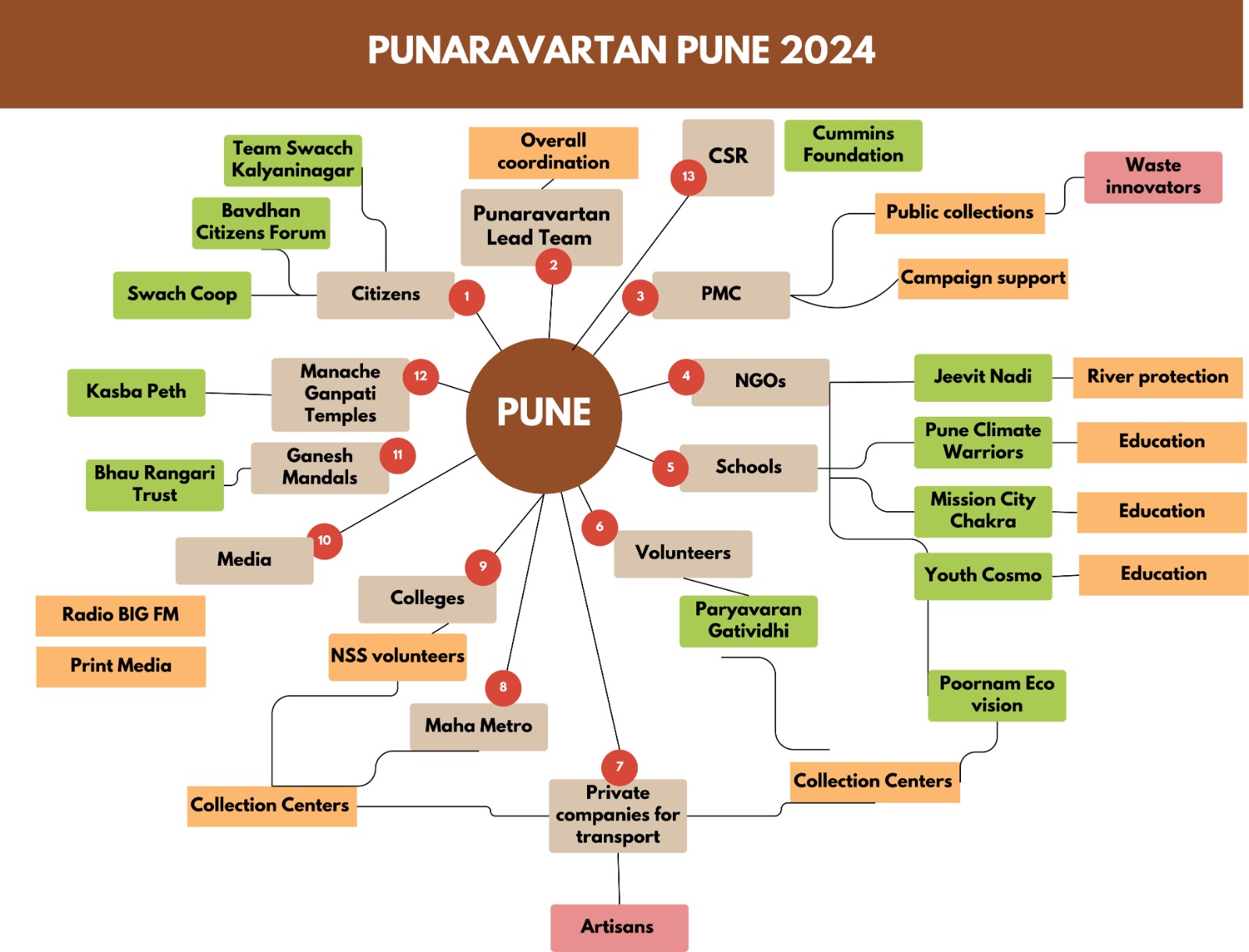
Campaign Partners
Pune







SCHOOLS

 MMCOA
MMCOA
 MMIED
MMIED

COLLEGES
SPONSORS


With the support of
PUNE MUNICIPAL CORPORATION
Where does Immersion take place?
In Pune, idol immersion predominantly occurs at several key natural water bodies and designated artificial immersion sites. The Mula-Mutha River is a major location for these activities, with popular spots including Sangamwadi, Deccan, Vithalwadi, Garware Bridge, and Bhide Bridge. Additionally, lakes such as Katraj Lake and Pashan Lake are commonly used for idol immersion ceremonies. To promote eco-friendly practices, the Pune Municipal Corporation (PMC) has established artificial immersion tanks at various locations across the city, providing an alternative to traditional water bodies. These artificial tanks are set up in neighborhoods and major areas to facilitate safe and environmentally conscious idol immersion.
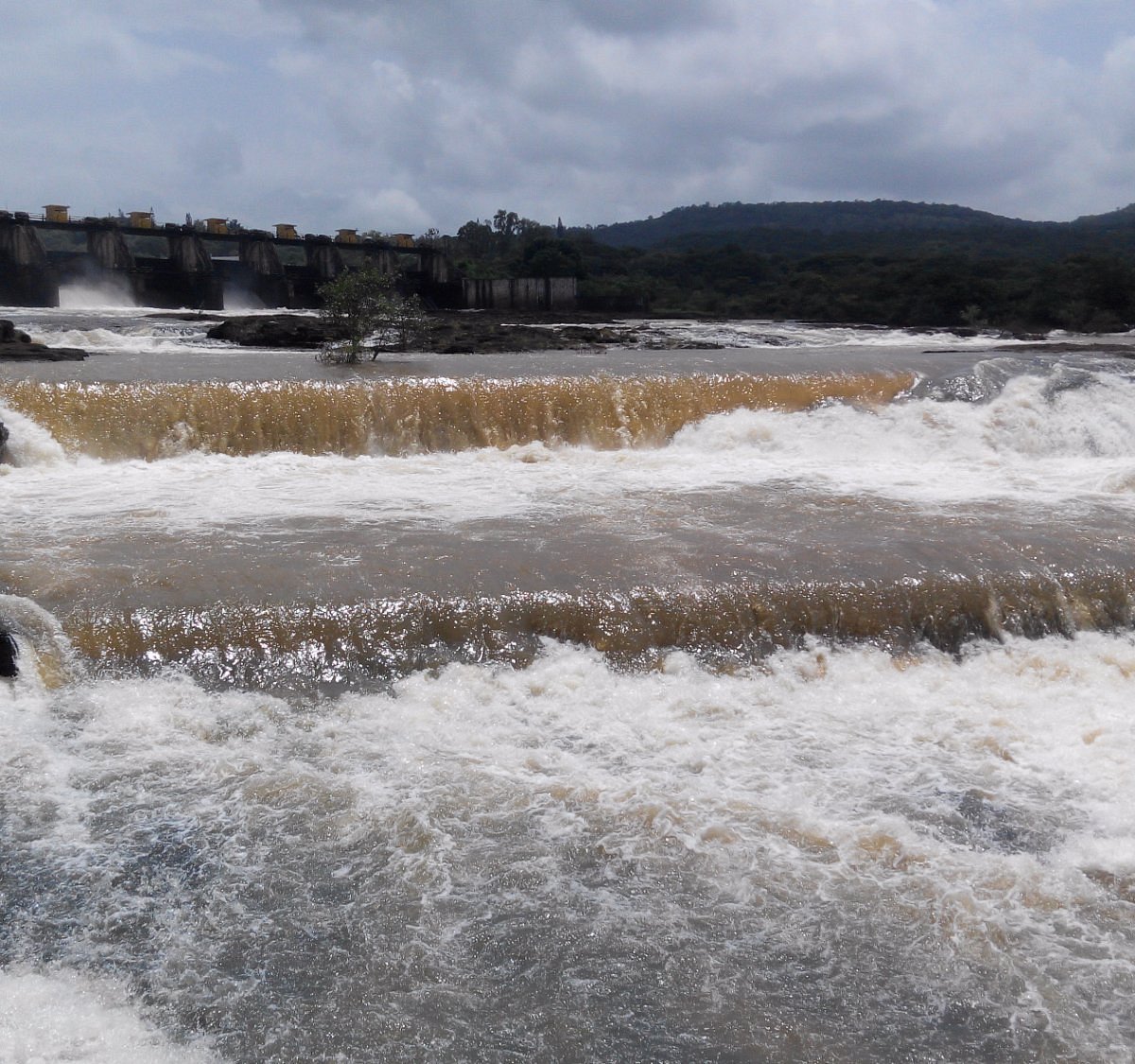
Khadakwasla Dam
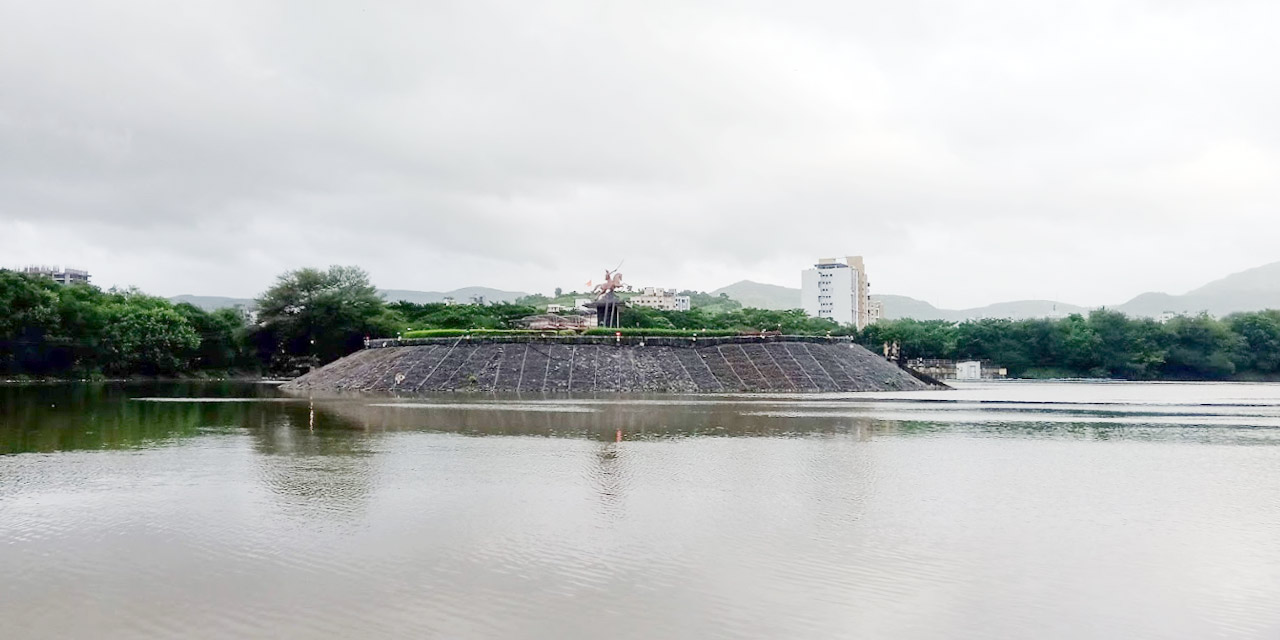
Katraj Lake
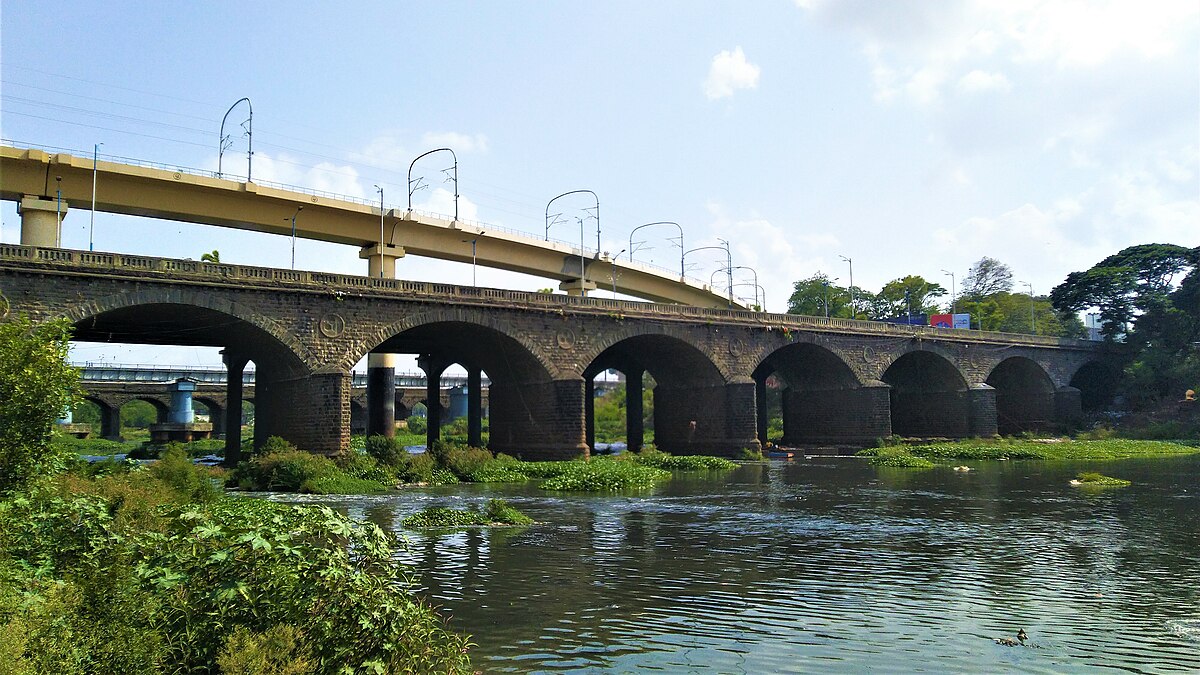
Mula-Mutha River
Impact of Idol Immersion
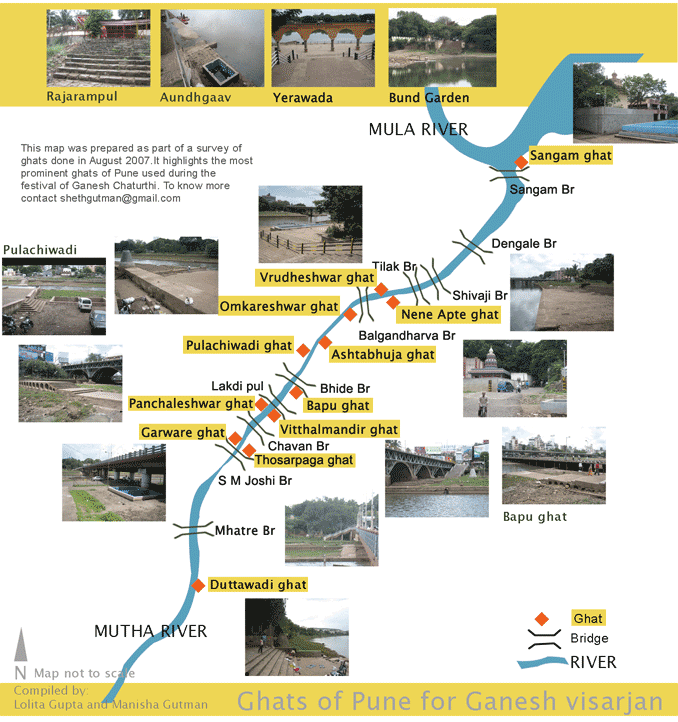 Most of the immersion points in Pune are along the ghats of the two rivers, Mula and Mutha. At these ghats, immersion tanks have been built; however, many idols still find their way into the rivers themselves.
In Pune, the celebration of Ganesh Chaturthi brings with it significant ecological challenges, particularly concerning idol immersion. Popular immersion sites include the Mula-Mutha River, Katraj Lake, and Pashan Lake. The idols, often made from Plaster of Paris (PoP) and painted with toxic dyes, contribute to water pollution. These materials release harmful chemicals such as lead, aluminum, and chromium into the water, damaging aquatic ecosystems.
The aftermath of immersions sees broken idols, plastic, and other offerings littering the water bodies and their surroundings. This pollution harms marine life, with toxic substances affecting fish and other aquatic organisms. Efforts to promote eco-friendly practices, such as using artificial tanks for immersions, are underway but require more robust implementation and public participation to mitigate the environmental impact effectively
Material
In Pune, Ganesh idols are traditionally made from a variety of materials, each chosen based on cultural preferences, environmental considerations, and artistic styles. The most traditional and eco-friendly material is clay, specifically Shadu Mati, a natural clay found in riverbeds that dissolves easily in water, making it ideal for environmentally friendly immersions. Another commonly used material is Plaster of Paris (POP), favored for its ease of molding and finishing, although it poses environmental challenges as it does not dissolve easily in water. Paper mache is gaining popularity due to its eco-friendly nature, being lightweight and biodegradable. Additionally, some artisans use natural fibers and plant-based materials such as coir and jute, which are biodegradable and aesthetically unique. There is also a growing trend towards using recyclable materials like recycled paper and cardboard, reflecting a shift towards more sustainable practices. The choice of material often depends on the preferences of the devotees, cost considerations, and the desire to minimize environmental impact, with many in Pune now opting for eco-friendly alternatives to reduce the ecological footprint of Ganesh Chaturthi celebrations.
Government Action
The Pune Municipal Corporation (PMC) took decisive action to ensure an eco-friendly Ganesh festival, urging citizens to avoid purchasing Plaster of Paris (POP) idols, which are banned by the government. In a recent order, the PMC directed craftsmen, artisans, and manufacturers to use only natural, biodegradable, and eco-friendly materials like traditional clay and mud for making idols.
The order prohibited the use of POP, plastic, and thermocol in idol-making and encouraged using dried flower components, straw, and natural tree resins for ornaments. The Central Pollution Control Board (CPCB) guidelines were reiterated, emphasizing eco-friendly, water-based, biodegradable, and non-toxic natural dyes for coloring idols. The use of toxic chemical dyes, oil paints, enamel, and synthetic dyes was strictly prohibited, recommending natural materials and dyes for decorative clothes instead.
Dr. Kunal Khemnar, additional commissioner of PMC, stressed the importance of an eco-friendly approach to idol-making for environmental protection and urged citizens to support the initiative by buying from craftsmen following pollution guidelines.
SOCIETIES PARTICIPATING IN COLLECTION
Coordinated by Swach Cooperative – 1st Oct 2023
PUNE
Since the end of the Ganesh festival 2024, the Punaravartan team has been developing a web application as a tool for all stakeholders involved in the campaign. This application can connect the clay donors with the clay processors and recyclers eventually.
The Pune Municipal Corporation took the initiative to integrate this web application into their PMC care mobile application for easy access to citizens of Pune.
This was launched by Hon’ble Sri Prithwiraj B P on the occasion of Earth Day at his office.
On 22 Jan 2025, we met with the chairman of the Maharashtra Pollution Control Board Mr Siddhesh Kadam, while he was visiting Pune. Pune Municipal Commissioner Sri Rajendra Bhosale and MPCB PRO Sri Sanjay Bhuskute were also present.
Punaravartan 2024
AABHAAR SABHA
As is the tradition we organised an Aabhaar sabha for all the partners and volunteers in Pune who made the event such a resounding success. This was hosted by the Rupa Rahul Bajaj Center for Environment and Arts, Pune.
Certificate
PUNE 2024
List of collection centers
15 Sept & 22 Sept 2024
10 am to 1 pm
See Collection Centres Neer Me
MAP OF COLLECTION CENTERS
Dates of collection : 15 Sept and 22 Sept 2024
Click on the icon on top left of the map to get details of coordinator for each center and contact details
LIST OF PMC COLLECTION CENTERS
Dates of collection : 12 Sept and 17 Sept 2024
4 pm to 8 pm
MAP OF PMC COLLECTION CENTERS
Dates of collection : 12 Sept and 17 Sept 2024
Click on the icon on top left of the map to get details of coordinator for each center and contact details
Punaravartan Posters 2024
Campaign Activities
PMC adopts Punaravartan 2024
Pune Municipal Commissioner Sri Rajendra Bhosale and Additional Commissioner Sri Prithviraj B P launch Punaravartan for the year 2024.
PMC-MANYAT-PATRA
PMC Manyata Patra
Campaign Partners
Pune
SCHOOLS
MMCOA
MMIED
COLLEGES
SPONSORS
With the support of
PUNE MUNICIPAL CORPORATION
Where does Immersion take place?
In Pune, idol immersion predominantly occurs at several key natural water bodies and designated artificial immersion sites. The Mula-Mutha River is a major location for these activities, with popular spots including Sangamwadi, Deccan, Vithalwadi, Garware Bridge, and Bhide Bridge. Additionally, lakes such as Katraj Lake and Pashan Lake are commonly used for idol immersion ceremonies. To promote eco-friendly practices, the Pune Municipal Corporation (PMC) has established artificial immersion tanks at various locations across the city, providing an alternative to traditional water bodies. These artificial tanks are set up in neighborhoods and major areas to facilitate safe and environmentally conscious idol immersion.
Khadakwasla Dam
Katraj Lake
Mula-Mutha River
Impact of Idol Immersion
Most of the immersion points in Pune are along the ghats of the two rivers, Mula and Mutha. At these ghats, immersion tanks have been built; however, many idols still find their way into the rivers themselves.In Pune, the celebration of Ganesh Chaturthi brings with it significant ecological challenges, particularly concerning idol immersion. Popular immersion sites include the Mula-Mutha River, Katraj Lake, and Pashan Lake. The idols, often made from Plaster of Paris (PoP) and painted with toxic dyes, contribute to water pollution. These materials release harmful chemicals such as lead, aluminum, and chromium into the water, damaging aquatic ecosystems.
The aftermath of immersions sees broken idols, plastic, and other offerings littering the water bodies and their surroundings. This pollution harms marine life, with toxic substances affecting fish and other aquatic organisms. Efforts to promote eco-friendly practices, such as using artificial tanks for immersions, are underway but require more robust implementation and public participation to mitigate the environmental impact effectively
Material
In Pune, Ganesh idols are traditionally made from a variety of materials, each chosen based on cultural preferences, environmental considerations, and artistic styles. The most traditional and eco-friendly material is clay, specifically Shadu Mati, a natural clay found in riverbeds that dissolves easily in water, making it ideal for environmentally friendly immersions. Another commonly used material is Plaster of Paris (POP), favored for its ease of molding and finishing, although it poses environmental challenges as it does not dissolve easily in water. Paper mache is gaining popularity due to its eco-friendly nature, being lightweight and biodegradable. Additionally, some artisans use natural fibers and plant-based materials such as coir and jute, which are biodegradable and aesthetically unique. There is also a growing trend towards using recyclable materials like recycled paper and cardboard, reflecting a shift towards more sustainable practices. The choice of material often depends on the preferences of the devotees, cost considerations, and the desire to minimize environmental impact, with many in Pune now opting for eco-friendly alternatives to reduce the ecological footprint of Ganesh Chaturthi celebrations.
Government Action
The Pune Municipal Corporation (PMC) took decisive action to ensure an eco-friendly Ganesh festival, urging citizens to avoid purchasing Plaster of Paris (POP) idols, which are banned by the government. In a recent order, the PMC directed craftsmen, artisans, and manufacturers to use only natural, biodegradable, and eco-friendly materials like traditional clay and mud for making idols.
The order prohibited the use of POP, plastic, and thermocol in idol-making and encouraged using dried flower components, straw, and natural tree resins for ornaments. The Central Pollution Control Board (CPCB) guidelines were reiterated, emphasizing eco-friendly, water-based, biodegradable, and non-toxic natural dyes for coloring idols. The use of toxic chemical dyes, oil paints, enamel, and synthetic dyes was strictly prohibited, recommending natural materials and dyes for decorative clothes instead.
Dr. Kunal Khemnar, additional commissioner of PMC, stressed the importance of an eco-friendly approach to idol-making for environmental protection and urged citizens to support the initiative by buying from craftsmen following pollution guidelines.
SOCIETIES PARTICIPATING IN COLLECTION
Coordinated by Swach Cooperative – 1st Oct 2023
PUNE
Since the end of the Ganesh festival 2024, the Punaravartan team has been developing a web application as a tool for all stakeholders involved in the campaign. This application can connect the clay donors with the clay processors and recyclers eventually.
The Pune Municipal Corporation took the initiative to integrate this web application into their PMC care mobile application for easy access to citizens of Pune.
This was launched by Hon’ble Sri Prithwiraj B P on the occasion of Earth Day at his office.
On 22 Jan 2025, we met with the chairman of the Maharashtra Pollution Control Board Mr Siddhesh Kadam, while he was visiting Pune. Pune Municipal Commissioner Sri Rajendra Bhosale and MPCB PRO Sri Sanjay Bhuskute were also present.
Punaravartan 2024 AABHAAR SABHA
As is the tradition we organised an Aabhaar sabha for all the partners and volunteers in Pune who made the event such a resounding success. This was hosted by the Rupa Rahul Bajaj Center for Environment and Arts, Pune.
Certificate
PUNE 2024 List of collection centers
15 Sept & 22 Sept 2024 10 am to 1 pm
MAP OF COLLECTION CENTERS Dates of collection : 15 Sept and 22 Sept 2024
Click on the icon on top left of the map to get details of coordinator for each center and contact details
LIST OF PMC COLLECTION CENTERS
Dates of collection : 12 Sept and 17 Sept 2024 4 pm to 8 pm
MAP OF PMC COLLECTION CENTERS Dates of collection : 12 Sept and 17 Sept 2024
Click on the icon on top left of the map to get details of coordinator for each center and contact details
Punaravartan Posters 2024
Campaign Activities
PMC adopts Punaravartan 2024
PMC Manyata Patra
Campaign Partners Pune
SCHOOLS
COLLEGES
SPONSORS
With the support of PUNE MUNICIPAL CORPORATION
Where does Immersion take place?
In Pune, idol immersion predominantly occurs at several key natural water bodies and designated artificial immersion sites. The Mula-Mutha River is a major location for these activities, with popular spots including Sangamwadi, Deccan, Vithalwadi, Garware Bridge, and Bhide Bridge. Additionally, lakes such as Katraj Lake and Pashan Lake are commonly used for idol immersion ceremonies. To promote eco-friendly practices, the Pune Municipal Corporation (PMC) has established artificial immersion tanks at various locations across the city, providing an alternative to traditional water bodies. These artificial tanks are set up in neighborhoods and major areas to facilitate safe and environmentally conscious idol immersion.
Khadakwasla Dam
Katraj Lake
Mula-Mutha River
Impact of Idol Immersion
In Pune, the celebration of Ganesh Chaturthi brings with it significant ecological challenges, particularly concerning idol immersion. Popular immersion sites include the Mula-Mutha River, Katraj Lake, and Pashan Lake. The idols, often made from Plaster of Paris (PoP) and painted with toxic dyes, contribute to water pollution. These materials release harmful chemicals such as lead, aluminum, and chromium into the water, damaging aquatic ecosystems.
The aftermath of immersions sees broken idols, plastic, and other offerings littering the water bodies and their surroundings. This pollution harms marine life, with toxic substances affecting fish and other aquatic organisms. Efforts to promote eco-friendly practices, such as using artificial tanks for immersions, are underway but require more robust implementation and public participation to mitigate the environmental impact effectively
Material
In Pune, Ganesh idols are traditionally made from a variety of materials, each chosen based on cultural preferences, environmental considerations, and artistic styles. The most traditional and eco-friendly material is clay, specifically Shadu Mati, a natural clay found in riverbeds that dissolves easily in water, making it ideal for environmentally friendly immersions. Another commonly used material is Plaster of Paris (POP), favored for its ease of molding and finishing, although it poses environmental challenges as it does not dissolve easily in water. Paper mache is gaining popularity due to its eco-friendly nature, being lightweight and biodegradable. Additionally, some artisans use natural fibers and plant-based materials such as coir and jute, which are biodegradable and aesthetically unique. There is also a growing trend towards using recyclable materials like recycled paper and cardboard, reflecting a shift towards more sustainable practices. The choice of material often depends on the preferences of the devotees, cost considerations, and the desire to minimize environmental impact, with many in Pune now opting for eco-friendly alternatives to reduce the ecological footprint of Ganesh Chaturthi celebrations.
Government Action
The Pune Municipal Corporation (PMC) took decisive action to ensure an eco-friendly Ganesh festival, urging citizens to avoid purchasing Plaster of Paris (POP) idols, which are banned by the government. In a recent order, the PMC directed craftsmen, artisans, and manufacturers to use only natural, biodegradable, and eco-friendly materials like traditional clay and mud for making idols.
The order prohibited the use of POP, plastic, and thermocol in idol-making and encouraged using dried flower components, straw, and natural tree resins for ornaments. The Central Pollution Control Board (CPCB) guidelines were reiterated, emphasizing eco-friendly, water-based, biodegradable, and non-toxic natural dyes for coloring idols. The use of toxic chemical dyes, oil paints, enamel, and synthetic dyes was strictly prohibited, recommending natural materials and dyes for decorative clothes instead.
Dr. Kunal Khemnar, additional commissioner of PMC, stressed the importance of an eco-friendly approach to idol-making for environmental protection and urged citizens to support the initiative by buying from craftsmen following pollution guidelines.